Common Foot Problems in Tauranga and When to Seek Treatment
Foot problems are common for people of all ages, especially when daily life involves walking, standing, work demands, sport, or recreational activity. In Tauranga, many people want to stay active and mobile, so even mild foot pain can quickly become frustrating when it starts affecting movement.
Common foot problems may begin as a small irritation, a sore heel, a painful toenail, or discomfort when walking. Some issues settle with simple changes, but others can worsen without proper diagnosis and treatment.
If you are experiencing foot pain, nail problems, skin irritation, walking discomfort, or recurring injuries, understanding the most common foot problems in Tauranga can help you know when to seek podiatry care.
At Foot Foundation, our podiatrists assess the cause of foot and ankle concerns and provide evidence-based treatment to reduce pain, improve mobility, and support long-term foot health.
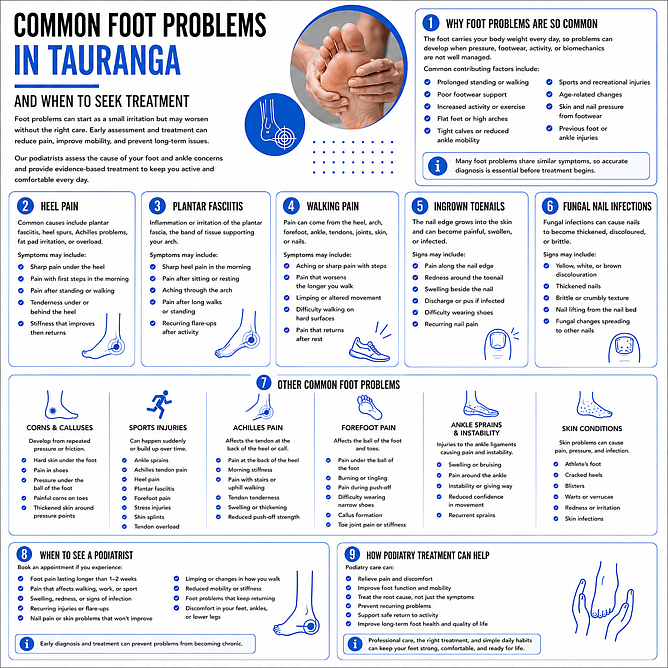
Why Foot Problems Are So Common
The foot is a complex structure made up of bones, joints, muscles, tendons, ligaments, nerves, skin, and nails. Every step places load through these structures, so problems can develop when pressure, footwear, activity, or biomechanics are not well managed.
Common contributing factors include:
Prolonged standing or walking
Poor footwear support
Increased activity or exercise
Flat feet or high arches
Tight calves or reduced ankle mobility
Sports and recreational injuries
Age-related joint or tissue changes
Skin and nail pressure from footwear
Previous foot or ankle injuries
Because many foot problems share similar symptoms, accurate diagnosis is important before treatment begins.
Common Foot Problems Seen by Podiatrists
Heel pain is one of the most common reasons people seek podiatry care. It may be caused by plantar fasciitis, heel spurs, Achilles tendon problems, fat pad irritation, or footwear-related overload.
Common symptoms include:
Sharp pain under the heel
Pain with the first steps in the morning
Pain after standing or walking
Tenderness under or behind the heel
Stiffness that improves then returns later
Heel pain often becomes chronic when ignored, so early treatment is important.
Plantar fasciitis is a common cause of heel and arch pain. It affects the plantar fascia, the strong band of tissue that supports the arch of the foot.
Patients often notice
Sharp heel pain in the morning
Pain after sitting or resting
Aching through the arch
Pain after long walks or standing
Recurring flare-ups after activity
Treatment often involves footwear advice, load management, custom orthotics, stretching, strengthening, and shockwave therapy when appropriate.
Pain when walking can come from several areas of the foot or ankle. It may involve the heel, arch, forefoot, ankle, tendons, joints, skin, or nails.
Walking pain may feel like:
Aching through the foot
Sharp pain with each step
Pain that worsens the longer you walk
Limping or altered movement
Difficulty walking on hard surfaces
Pain that returns after rest
Walking pain should be assessed if it lasts longer than one to two weeks or begins affecting daily activity.
Ingrown toenails occur when the nail edge grows into the surrounding skin. They can become painful, swollen, and infected if not treated early.
Common signs include:
Pain along the nail edge
Redness around the toenail
Swelling beside the nail
Discharge or pus if infected
Difficulty wearing shoes
Recurring nail pain
Professional treatment can relieve pain, manage infection, and help prevent the problem from coming back.
Fungal nail infections can cause toenails to become thickened, discoloured, brittle, or crumbly. They can be persistent and difficult to treat without proper diagnosis.
Signs may include:
Yellow, white, or brown nail discolouration
Thickened nails
Brittle or crumbly nail texture
Nail lifting from the nail bed
Fungal changes spreading to other toenails
A podiatrist can confirm whether the nail change is fungal and recommend appropriate treatment.
Corns and calluses develop from repeated pressure or friction. They are common in areas where footwear, toe shape, or foot mechanics create excess load.
Symptoms may include:
Hard skin under the foot
Pain in shoes
Pressure under the ball of the foot
Painful corns on toes
Thickened skin around pressure points
Podiatry care can remove painful hard skin safely and address the pressure causing it.
Sports Injuries
Sports and recreational activity can place high load through the feet and ankles. Injuries may happen suddenly or build up gradually over time.
Common sports-related foot and ankle problems include:
Ankle sprains
Achilles tendon pain
Heel pain
Plantar fasciitis
Forefoot pain
Stress injuries
Shin splints
Tendon overload
Treatment usually focuses on diagnosis, rehabilitation, footwear, load management, and safe return to activity.
Achilles pain affects the tendon at the back of the heel or lower calf. It is common in runners, walkers, active adults, and people who increase activity quickly.
Symptoms may include:
Pain at the back of the heel
Morning stiffness
Pain with stairs or uphill walking
Tendon tenderness
Swelling or thickening
Reduced push-off strength
Achilles pain should be treated carefully because the tendon often needs structured loading rather than simple rest.
Forefoot pain affects the ball of the foot and toes. It may be caused by pressure overload, bunions, Morton’s neuroma, arthritis, sesamoiditis, or footwear compression.
Patients may notice:
Pain under the ball of the foot
Burning or tingling
Pain during push-off
Difficulty wearing narrow shoes
Callus formation
Toe or joint discomfort
Forefoot pain often improves when pressure is redistributed through footwear changes, orthotics, and treatment of the underlying cause.
When to Seek Treatment for Foot Problems in Tauranga
You should consider booking a podiatry assessment if:
Foot pain lasts longer than one to two weeks
Pain is getting worse
Walking or standing has become uncomfortable
You are limping or changing how you move
Nail pain, swelling, or infection is present
Skin problems keep returning
Heel pain is worse in the morning
You have recurring injuries
You are avoiding activity because of pain
Home care has not helped
Early treatment often means simpler care, faster recovery, and fewer long-term complications.
How Foot Problems Are Diagnosed
At Foot Foundation, assessment focuses on identifying the cause of symptoms rather than only treating the painful area.
Your podiatrist may assess:
Medical history and symptoms
Foot posture and alignment
Pain location
Joint movement
Muscle strength
Gait and walking pattern
Footwear fit and wear patterns
Skin and nail health
Activity and training load
Previous injuries
For some conditions, imaging such as ultrasound, X-ray, or MRI may be recommended if more detail is needed.
Treatment Options for Common Foot Problems
Treatment depends on the diagnosis, severity, and patient goals. A treatment plan may include one or more of the following.
Footwear changes can reduce pressure, improve support, and help prevent symptoms from returning.
Orthotics may help improve foot alignment, reduce overload, and support better walking mechanics.
For ingrown toenails, fungal nails, thickened nails, or damaged nails, podiatry treatment can relieve pain and improve nail health.
Painful hard skin can be safely reduced, with advice provided to help minimise recurrence.
Rehabilitation and Exercise Therapy
Strengthening and mobility exercises may be recommended for tendon pain, sports injuries, ankle instability, and recurring foot pain.
Shockwave therapy may be used for chronic heel pain, plantar fasciitis, Achilles pain, and some tendon-related conditions.
Manual therapy may help improve joint movement, reduce stiffness, and support better foot and ankle function.
Referral for Imaging or Specialist Care
Where needed, your podiatrist may refer for imaging or specialist review to guide treatment.
Preventing Common Foot Problems
Preventing foot problems often comes down to support, load management, and early care.
Helpful steps include:
Wearing supportive footwear
Replacing worn-out shoes
Managing increases in walking or exercise gradually
Keeping feet clean and dry
Cutting toenails properly
Treating skin and nail issues early
Strengthening the feet and lower legs
Seeking care when symptoms persist
Small problems are easier to treat before they become chronic.
Foot Care at Foot Foundation Tauranga
Foot Foundation provides podiatry care in Tauranga for common foot problems including foot pain, heel pain, walking pain, ingrown toenails, fungal nails, skin concerns, sports injuries, and Achilles pain.
Our Tauranga clinic is located at:
Patients can access assessment, diagnosis, treatment planning, orthotics, nail care, footwear advice, rehabilitation support, and ongoing prevention.
Our approach focuses on practical treatment, clear communication, and long-term foot health.
If foot pain, nail problems, skin concerns, or walking discomfort are affecting your daily life, early assessment is the best next step.
Foot Foundation provides podiatry care in Tauranga to help identify the cause of your symptoms, reduce pain, and support confident movement.