Return to Sport After a Foot or Ankle Injury: What Matters Most
Returning to sport after a foot or ankle injury is not just about waiting until the pain settles. Pain relief is only one part of recovery. To return safely, the foot and ankle need enough strength, mobility, balance, control, load tolerance, footwear support, and confidence to handle the demands of sport again.
Many patients feel ready too early. They rest for a few weeks, pain improves, then they return to running, football, netball, gym training, tennis, walking, or weekend sport. The problem is that the injured area may not have fully recovered. When training load increases, pain, swelling, stiffness, or instability can return.
This is why return-to-sport rehabilitation matters.
At Foot Foundation, return-to-sport planning after a foot or ankle injury focuses on more than symptoms. The goal is to assess whether the body is ready for the demands of sport and what still needs to improve before full return.
Cameron Collins, Foot Foundation’s Lead Clinician and dual-qualified Physiotherapist and Podiatrist, supports return-to-sport rehabilitation by assessing strength, movement, load tolerance, footwear, foot mechanics, and injury risk. His dual background is useful for active patients because foot and ankle injuries often need both podiatry and rehabilitation input.
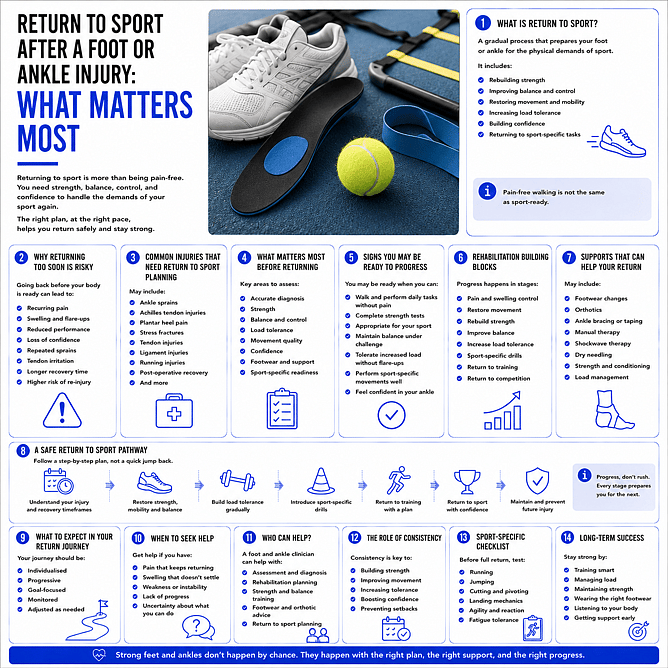
Why Returning to Sport Too Soon Can Be a Problem
Returning to sport too soon is one of the most common reasons foot and ankle pain comes back.
Pain may settle before the injured area has fully recovered. This means the athlete may feel fine during normal walking but struggle with running, jumping, landing, cutting, sprinting, or sudden direction changes.
Returning too early may lead to:
Recurring pain
Swelling after activity
Reduced performance
Loss of confidence
Repeated ankle sprains
Tendon flare-ups
Compensatory knee, hip, or back pain
Longer recovery time
Higher risk of re-injury
Health New Zealand notes that after a sprained ankle, physiotherapy may help restore movement, strength and balance, and support return to normal activities; it also notes that taping or bracing may be suggested when returning to sport.
The key point is simple: returning to sport should be based on function, not just pain.
Pain-Free Does Not Always Mean Sport-Ready
A patient can be pain-free during daily life but still not ready for sport.
Sport usually places higher demands on the foot and ankle than normal walking. Depending on the activity, the body may need to handle:
Running load
Jumping
Landing
Sprinting
Pivoting
Change of direction
Uneven surfaces
Repeated impact
Fatigue
Contact or unpredictable movement
A foot or ankle may feel fine at rest but fail when these demands return.
This is especially common after:
Ankle sprains
Achilles tendon injuries
Plantar heel pain
Stress injuries
Tendon injuries
Ligament injuries
Foot fractures
Post-operative recovery
Running-related injuries
A proper return-to-sport plan should test whether the body is ready for sport-specific demands.
Common Foot and Ankle Injuries That Need Return-to-Sport Planning
Many foot and ankle injuries need staged rehabilitation before full return to sport.
These may include:
Stress fractures
Tendon injuries
Ligament injuries
Running injuries
Sports-related foot pain
Post-operative foot or ankle recovery
Some injuries recover quickly. Others need a more careful plan, especially if symptoms have been present for weeks or months, the injury keeps returning, or the athlete has already failed one return-to-sport attempt.
What Matters Most Before Returning to Sport?
Accurate Diagnosis
Before returning to sport, the diagnosis needs to be clear.
A vague diagnosis like “foot pain” or “ankle pain” is not enough. The clinician needs to understand what structure was injured, why it was injured, and what demands the sport will place on it.
Assessment may consider:
Pain location
Injury history
Swelling pattern
Joint mobility
Strength
Balance
Movement control
Footwear
Playing surface
Training load
Previous injuries
Sport-specific demands
A clear diagnosis helps guide the correct rehabilitation pathway.
Strength
Strength is one of the biggest factors in safe return to sport.
After injury, muscles around the foot, ankle, calf, and lower limb may weaken. This can affect stability, landing, running, push-off, and confidence.
Strength assessment may include:
Calf strength
Foot muscle strength
Ankle strength
Single-leg control
Push-off ability
Landing control
Endurance under fatigue
Weakness is often missed when pain settles early. But if strength is not rebuilt, symptoms may return when sport demands increase.
Balance and Control
Balance and proprioception are especially important after ankle injuries.
Proprioception is the body’s ability to sense position and react to movement. After ankle sprains, this can be reduced, making the ankle more likely to roll again.
Return-to-sport rehabilitation may include:
Single-leg balance
Dynamic balance
Uneven-surface control
Landing mechanics
Change-of-direction control
Reaction drills
Sport-specific movement
Research on ankle rehabilitation supports progressing from range-of-motion and strengthening into proprioception training and sport-specific activity before returning to competition.
Load Tolerance
Load tolerance means the injured area can handle the amount of stress required by sport.
A tendon, ligament, joint, or bone may tolerate normal walking but not running, jumping, or repeated training sessions.
Load tolerance needs to be rebuilt gradually through:
Walking progression
Strength exercises
Impact preparation
Running progression
Sport-specific drills
Controlled increases in training volume
Recovery monitoring
This is especially important for Achilles pain, plantar heel pain, stress injuries, and recurring tendon problems.
Mobility
Restricted movement can change how the foot and ankle load during sport.
Reduced ankle mobility may affect:
Squatting
Running mechanics
Landing
Pushing off
Change of direction
Balance
Shock absorption
Mobility work may include joint movement, calf flexibility, foot mobility, and manual therapy where appropriate.
Footwear
Footwear can strongly affect return to sport.
Shoes should be checked for:
Fit
Width
Cushioning
Stability
Sole wear
Heel counter support
Sport suitability
Surface suitability
Compatibility with orthotics or bracing
Returning to sport in worn, narrow, unstable, or unsuitable footwear can undo good rehabilitation.
Some patients may need extra support during return to sport.
This may include:
Orthotics
Ankle bracing
Taping
Footwear modification
Heel lifts
Temporary support during higher-risk activity
Support is not a replacement for rehabilitation, but it can help reduce strain and improve confidence while the body rebuilds strength and control.
Signs You Are Not Ready to Return Yet
You may not be ready to return to sport if:
Pain returns during training
Swelling appears after activity
You are limping
The ankle feels unstable
You cannot balance confidently on one leg
You feel weak during push-off
You are avoiding certain movements
You feel nervous changing direction
You cannot complete basic strength tasks
Pain increases the next day
You need pain relief to train
Pushing through these signs can lead to a longer recovery.
What a Return-to-Sport Assessment May Include
A return-to-sport assessment should check whether the injured area can handle the demands of the patient’s activity.
This may include:
Symptom and injury history
Previous treatment review
Foot and ankle examination
Strength testing
Balance testing
Mobility assessment
Walking or running assessment
Jumping and landing assessment
Footwear review
Orthotic or brace review
Training load review
Sport-specific movement testing
Return-to-sport planning
The goal is to identify what still needs work before full return.
Return-to-Sport Rehabilitation Steps
Stage 1: Settle Pain and Protect the Injury
The first stage focuses on reducing pain, swelling, and irritation while protecting the injured area.
This may involve:
Activity modification
Footwear changes
Taping or bracing
Load reduction
Gentle mobility work
Early strength exercises where appropriate
Healthify NZ explains that strains and sprains often respond well to rest, ice, compression, elevation and referral during the first few days after injury.
Stage 2: Restore Movement and Strength
Once symptoms are settling, rehabilitation should rebuild mobility and strength.
This may include:
Calf strengthening
Foot strengthening
Ankle strengthening
Joint mobility work
Balance exercises
Walking progression
Stage 3: Build Load Tolerance
The next stage prepares the injury for higher activity levels.
This may include:
Longer walking
Controlled running progression
Hopping drills
Step work
Progressive tendon loading
Gym-based strengthening
Sport-specific loading
Stage 4: Rebuild Sport-Specific Control
This stage prepares the athlete for the specific demands of their sport.
This may include:
Jumping and landing
Sprinting
Cutting
Pivoting
Change-of-direction drills
Uneven-surface work
Ball skills or sport-specific tasks
Fatigue-based control work
Stage 5: Return Fully and Prevent Re-Injury
The final stage focuses on safe return and long-term prevention.
This may include:
Training load planning
Warm-up advice
Footwear review
Bracing or taping where needed
Strength maintenance
Ongoing prevention exercises
Monitoring early warning signs
The goal is not just to get back once. The goal is to stay back.
Where Cameron Collins Fits Into Return-to-Sport Rehabilitation
Cameron Collins is Foot Foundation’s Lead Clinician and is dual-qualified as both a Physiotherapist and Podiatrist.
This matters for return-to-sport cases because sport-related foot and ankle injuries often involve both mechanical and functional factors.
Cameron may assess:
Foot and ankle mechanics
Strength deficits
Movement control
Tendon load tolerance
Joint mobility
Balance and stability
Footwear suitability
Orthotic needs
Bracing requirements
Training load
Re-injury risk
His approach may include foot and ankle rehabilitation, manual therapy, exercise programmes, orthotic therapy, footwear assessment, ankle bracing, shockwave therapy where appropriate, dry needling where appropriate, and staged return-to-sport planning.
The aim is to help patients return to activity with more confidence and a lower risk of the same injury returning.
Return to Sport After Foot or Ankle Injury in Auckland
Foot Foundation provides return-to-sport assessment and rehabilitation support in Auckland.
Cameron Collins is available at:
These Auckland locations may suit patients recovering from ankle sprains, Achilles pain, plantar heel pain, tendon injuries, running injuries, sports injuries, recurring foot or ankle pain, and post-operative recovery.
Foot and Ankle Care in Hamilton
Foot Foundation provides podiatry and foot care services in Hamilton.
Hamilton clinic locations include:
Hamilton Central – 7/127 Collingwood Street
Hamilton East – 16 Beale Street
Patients in Hamilton can access care for foot pain, heel pain, ankle concerns, orthotics, general podiatry, nail conditions, and rehabilitation-related needs depending on service availability.
Foot and Ankle Care in Tauranga
Foot Foundation provides podiatry care in Tauranga for patients with foot pain, walking pain, heel pain, sports injuries, and general foot concerns.
The Tauranga clinic is located at:
Tauranga Bethlehem – 253A State Highway 2
Patients can access assessment and treatment support for common foot and ankle concerns, with referral pathways available where more specialised rehabilitation input is required.
What to Bring to a Return-to-Sport Appointment
Bring anything that helps show the demands of your sport and what has already been tried.
Helpful items include:
Sports shoes
Work shoes if relevant
Existing orthotics
Braces or supports
Previous imaging reports
Previous treatment notes if available
Training schedule
Details of sport position or activity demands
List of exercises already tried
Timeline of injury and flare-ups
Notes on what movements cause symptoms
This helps the clinician build a more practical return-to-sport plan.
Returning to sport after a foot or ankle injury should not be based on guesswork.
Pain settling is important, but it is not the only marker of readiness. Strength, balance, mobility, load tolerance, footwear, movement quality, and confidence all matter.
Foot Foundation provides return-to-sport assessment and rehabilitation planning for foot and ankle injuries, including complex cases with Cameron Collins at Remuera and Smales Farm.