Plantar Fasciitis Treatment in Tauranga for Heel Pain Relief
Plantar fasciitis is one of the most common causes of heel pain, especially for people who spend long hours standing, walking, exercising, or staying active. It often causes sharp pain under the heel, particularly with the first steps in the morning or after sitting for a while.
If you are looking for plantar fasciitis treatment in Tauranga, early assessment is important. Rest may help temporarily, but plantar fasciitis often returns if the underlying cause is not properly treated.
At Foot Foundation, our podiatrists assess the cause of plantar fasciitis and provide evidence-based treatment to reduce heel pain, improve foot function, and help prevent symptoms from coming back.
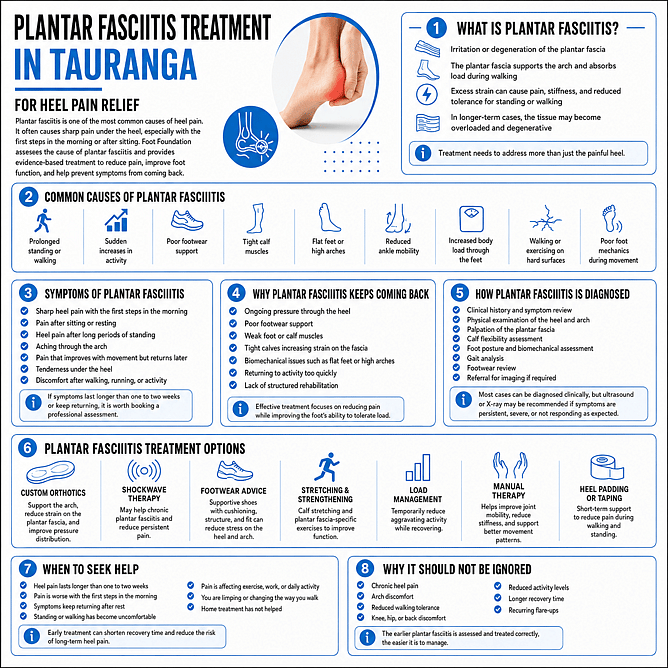
What Is Plantar Fasciitis?
Plantar fasciitis is a condition involving irritation or degeneration of the plantar fascia. The plantar fascia is a strong band of connective tissue that runs along the bottom of the foot, supporting the arch and helping absorb load during walking.
When the plantar fascia is placed under excessive strain, small areas of tissue irritation can develop. Over time, this may lead to pain, stiffness, and reduced tolerance for standing or walking.
Despite the name, plantar fasciitis is not always purely inflammatory. In many long-term cases, the tissue becomes overloaded and degenerative, which means targeted treatment is usually needed for proper recovery.
Common Causes of Plantar Fasciitis
Plantar fasciitis often develops gradually due to repeated strain on the heel and arch.
Common causes include:
Prolonged standing or walking
Sudden increases in activity
Poor footwear support
Tight calf muscles
Flat feet or high arches
Reduced ankle mobility
Increased body load through the feet
Walking or exercising on hard surfaces
Poor foot mechanics during movement
Because there are often several contributing factors, treatment needs to address more than just the painful heel.
Symptoms of Plantar Fasciitis
The most common symptom of plantar fasciitis is pain under the heel, but symptoms can vary depending on severity.
Patients often experience:
Sharp heel pain with the first steps in the morning
Pain after sitting or resting
Heel pain after long periods of standing
Aching through the arch
Pain that improves with movement but returns later
Tenderness under the heel
Discomfort after walking, running, or activity
If symptoms last longer than one to two weeks or keep returning, it is worth booking a professional assessment.
Why Plantar Fasciitis Keeps Coming Back
Many people try stretching, massage, new shoes, or rest before seeing a podiatrist. These may provide short-term relief, but symptoms often return if the main cause is still present.
Plantar fasciitis may keep coming back because of:
Ongoing pressure through the heel
Poor footwear support
Weak foot or calf muscles
Tight calves increasing strain on the fascia
Biomechanical issues such as flat feet or high arches
Returning to activity too quickly
Lack of structured rehabilitation
Effective treatment focuses on reducing pain while improving the foot’s ability to tolerate load.
How Plantar Fasciitis Is Diagnosed
At Foot Foundation, diagnosis begins with understanding your symptoms, activity level, footwear, and daily movement patterns.
Your assessment may include:
Clinical history and symptom review
Physical examination of the heel and arch
Palpation of the plantar fascia
Calf flexibility assessment
Foot posture and biomechanical assessment
Gait analysis
Footwear review
Referral for imaging if required
Most cases can be diagnosed clinically, but ultrasound or X-ray may be recommended if symptoms are persistent, severe, or not responding as expected.
Plantar Fasciitis Treatment Options in Tauranga
Treatment depends on the cause, severity, and how long symptoms have been present. A treatment plan may include one or more of the following.
Custom orthotics can help support the arch, reduce strain on the plantar fascia, and improve pressure distribution through the foot. They are especially useful when plantar fasciitis is linked to flat feet, high arches, or poor load control.
Shockwave therapy may be used for chronic plantar fasciitis that has not improved with basic care. It is designed to stimulate tissue response and help reduce persistent pain.
Footwear plays a major role in plantar fasciitis. Supportive shoes with appropriate cushioning, structure, and fit can reduce stress on the heel and arch.
Stretching and Strengthening
Rehabilitation may include calf stretching, plantar fascia-specific exercises, and strengthening work to improve foot and lower limb function.
Load Management
Reducing aggravating activity temporarily can help settle symptoms. Your podiatrist may guide you on how to adjust walking, work, or exercise loads while recovering.
Manual therapy can help improve joint mobility, reduce stiffness, and support better movement patterns through the foot and ankle.
Heel Padding or Taping
Short-term taping, padding, or heel support may be used to reduce pain during walking and standing.
When to Seek Plantar Fasciitis Treatment in Tauranga
You should book an assessment if:
Heel pain lasts longer than one to two weeks
Pain is worse with the first steps in the morning
Symptoms keep returning after rest
Standing or walking has become uncomfortable
Pain is affecting exercise, work, or daily activity
You are limping or changing the way you walk
Home treatment has not helped
Early treatment can shorten recovery time and reduce the risk of long-term heel pain.
Why Plantar Fasciitis Should Not Be Ignored
Ignoring plantar fasciitis can lead to ongoing pain and compensation. When you avoid loading the painful heel, other areas of the foot and leg may take extra strain.
Untreated plantar fasciitis may contribute to:
Chronic heel pain
Arch discomfort
Reduced walking tolerance
Knee, hip, or back discomfort
Reduced activity levels
Longer recovery time
Recurring flare-ups
The earlier plantar fasciitis is assessed and treated correctly, the easier it is to manage.
Plantar Fasciitis Treatment at Foot Foundation Tauranga
Foot Foundation provides plantar fasciitis treatment in Tauranga for patients experiencing heel pain, arch pain, walking pain, and recurring foot discomfort.
Our Tauranga clinic is located at:
Patients can access podiatry care for plantar fasciitis, heel pain, foot pain, walking pain, orthotics, footwear advice, and rehabilitation support.
Our approach focuses on accurate diagnosis, practical treatment, and long-term prevention so patients can return to daily movement with more comfort and confidence.
Book Plantar Fasciitis Treatment in Tauranga
If heel pain is affecting your walking, work, exercise, or daily routine, early assessment is the best next step.
Foot Foundation provides plantar fasciitis treatment in Tauranga to help reduce pain, improve movement, and support long-term foot health.