Why Your Fungal Nail Infection Keeps Coming Back
Fungal nail infections can be frustrating because they often improve slowly and may come back even after treatment. Many people try pharmacy products, home remedies, nail trimming, or antifungal creams, only to find that the nail becomes thick, yellow, brittle, crumbly, or discoloured again.
If your fungal nail infection keeps coming back, it does not always mean treatment failed completely. It may mean the source of reinfection was never addressed, the nail was not treated long enough, or the original problem was not properly diagnosed.
Fungal nail infections are stubborn because they can live within or beneath the nail plate. The toenail grows slowly, and the surrounding foot environment can continue to expose the nail to fungus.
At Foot Foundation, our podiatrists assess fungal nail infections properly, reduce thickened nail material where appropriate, discuss treatment options, and help patients reduce the risk of recurrence.
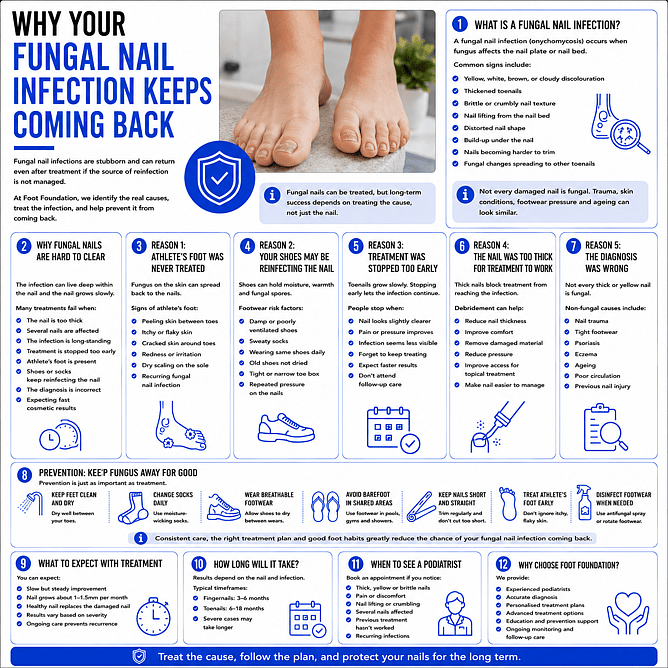
What Is a Fungal Nail Infection?
A fungal nail infection, also called onychomycosis, occurs when fungus affects the nail plate or nail bed. It commonly affects toenails because feet are often enclosed in shoes, exposed to moisture, and placed under repeated pressure.
Common signs include:
Yellow, white, brown, or cloudy nail discolouration
Thickened toenails
Brittle or crumbly nail texture
Nail lifting from the nail bed
Distorted nail shape
Build-up under the nail
Nails becoming harder to trim
Fungal changes spreading to other toenails
Not every thick or damaged nail is fungal. Nail trauma, pressure from footwear, psoriasis, eczema, ageing, and other nail conditions can look similar. This is one reason fungal nail treatment can fail — the nail may not have been fungal in the first place.
Why Fungal Nail Infections Are Hard to Clear
Fungal nails are difficult because the infection can sit deep within the nail. The nail plate acts like a barrier, making it harder for treatment to reach the affected area.
Toenails also grow slowly. Even when treatment is working, the damaged part of the nail still needs time to grow out and be replaced by healthier nail.
Fungal nail treatment may take months because the goal is not only to kill or reduce the fungus. The goal is to support new, healthier nail growth while reducing the risk of reinfection.
This is where many people lose progress. They stop treatment once the nail looks slightly better, but the infection may not be fully managed yet.
Reason 1: Athlete’s Foot Was Never Treated
One of the biggest reasons fungal nails keep coming back is untreated athlete’s foot.
Athlete’s foot is a fungal skin infection that often affects the skin between the toes or the sole of the foot. It can cause peeling, itching, cracking, redness, or dry flaky skin. Sometimes it is mild and easy to overlook.
The problem is simple: if fungus remains on the skin, it can spread back to the nails.
Signs of athlete’s foot may include:
Peeling skin between the toes
Itchy or flaky skin
Cracked skin around the toes
Redness or irritation
Dry scaling on the sole
Recurring fungal nail infection
Treating the nail while ignoring the skin is a weak plan. For better results, the surrounding skin should also be checked and managed.
Reason 2: Your Shoes May Be Reinfecting the Nail
Shoes can hold moisture, warmth, and fungal spores. If you continue wearing the same damp or contaminated footwear without addressing the environment, the nail can be exposed again and again.
This is especially common when people wear enclosed shoes for work, sport, walking, or long daily hours.
Footwear can contribute to recurrence when:
Shoes are damp or poorly ventilated
Socks stay sweaty for long periods
Shoes are worn every day without drying
Old footwear is reused during treatment
Shoes place repeated pressure on the nails
The toe box is too tight or narrow
A fungal nail treatment plan should include footwear and sock advice. Otherwise, the nail may improve temporarily and then become reinfected.
Reason 3: Treatment Was Stopped Too Early
Fungal nail treatment takes patience. Toenails grow slowly, so the nail will not look normal immediately, even when treatment is working.
Many patients stop treatment when:
The nail looks slightly clearer
Pain or pressure improves
The infection seems less visible
They forget to continue topical treatment
They expect faster results
They do not attend follow-up appointments
Stopping too early can allow fungal activity to continue. The damaged nail still needs time to grow out, and the new nail needs protection from reinfection.
Consistency matters more than most people realise.
Reason 4: The Nail Was Too Thick for Treatment to Work Properly
Thick fungal nails can block treatment from reaching the infected area. This is one reason over-the-counter products often disappoint patients.
When the nail is thick, brittle, lifted, or packed with debris, topical treatment may struggle to penetrate.
Professional nail debridement can help by reducing thickened or damaged nail material.
Debridement may help:
Reduce nail thickness
Improve comfort in shoes
Remove damaged nail material
Reduce pressure on the toe
Improve access for topical treatment
Make the nail easier to manage
Debridement alone may not cure the infection, but it can be an important part of a stronger treatment plan.
Reason 5: The Original Diagnosis Was Wrong
This is a big one.
Not every yellow, thick, or damaged toenail is fungal. Some nails look fungal but are actually damaged from pressure, trauma, skin conditions, or repeated footwear irritation.
Common non-fungal causes of nail changes include:
Nail trauma
Tight footwear
Repeated pressure from sport or work shoes
Psoriasis
Eczema
Age-related nail thickening
Poor circulation
Previous nail injury
Using fungal nail treatment on a nail that is not fungal will not solve the real problem. This is why podiatry assessment is important before committing to long treatment plans.
Reason 6: Other Nails Were Not Treated
Sometimes the most obvious nail gets treated, but smaller signs on nearby nails are ignored.
Fungal nail infections can affect more than one toenail. If nearby nails are also infected, even mildly, they can act as a source of reinfection.
Signs that more than one nail may be involved include:
Mild yellowing on nearby nails
White patches on other toenails
Thickening on multiple nails
Crumbling at the nail edge
Lifting on more than one nail
Recurring infection after treatment
A proper assessment should look at all toenails, not just the worst-looking one.
Reason 7: Nail Trauma Keeps Happening
Repeated nail trauma can make fungal nail infections more likely to return. When the nail is damaged, lifted, or separated from the nail bed, fungus has more opportunity to enter.
Common sources of nail trauma include:
Tight shoes
Narrow toe boxes
Long toenails pressing against footwear
Running or walking downhill
Repeated pressure from work boots
Sports footwear
Toe injuries
Poor nail cutting habits
Even the best treatment plan can struggle if the nail keeps getting damaged.
This is why footwear advice and nail care are part of fungal nail prevention.
Reason 8: Moisture Is Not Being Controlled
Fungus thrives in warm, damp environments. If the feet remain sweaty or shoes stay moist, recurrence is more likely.
Moisture problems may come from:
Sweaty feet
Non-breathable shoes
Wearing the same shoes daily
Not changing socks often enough
Damp work or sports shoes
Poor drying between toes
Shared wet areas
Simple prevention steps can make a real difference.
Helpful habits include:
Drying feet properly after bathing
Changing socks daily or more often if needed
Rotating shoes
Letting footwear dry fully
Choosing breathable socks
Avoiding damp enclosed footwear where possible
Wearing footwear in shared wet areas
Prevention is not separate from treatment. It is part of the treatment.
Reason 9: Home Remedies Were Used Instead of Proper Treatment
Many people try home remedies before seeing a podiatrist. These may include vinegar soaks, oils, filing, or general antifungal creams.
The problem is that stubborn fungal nails usually need more than surface-level care.
Home remedies often fail because:
The nail is too thick
The fungus is deep under the nail
The treatment is not applied long enough
The wrong condition is being treated
Shoes keep causing reinfection
Athlete’s foot is still present
The nail is not professionally reduced
There is no follow-up plan
This does not mean every home care step is useless. It means persistent fungal nail infections usually need proper assessment and a structured treatment plan.
Reason 10: There Was No Follow-Up
Fungal nail treatment is not a one-and-done fix. The nail needs monitoring because improvement happens gradually.
Follow-up allows your podiatrist to check:
Whether the nail is growing healthier from the base
Whether thickness is reducing
Whether more debridement is needed
Whether the infection is spreading
Whether footwear is causing pressure
Whether athlete’s foot is still present
Whether the treatment plan needs changing
Without follow-up, patients may continue with a treatment that is not working or stop too early when progress has only just started.
How to Stop Fungal Nails from Coming Back
The strongest approach is usually a complete plan, not just one product.
A recurrence prevention plan may include:
Proper nail assessment
Professional nail debridement
Treating athlete’s foot
Topical antifungal treatment where suitable
Cold laser treatment where appropriate
Footwear and sock advice
Moisture control
Safe nail cutting advice
Follow-up appointments
GP support for oral medication where appropriate
The goal is to reduce fungal load, support healthier nail growth, and remove the conditions that allowed the infection to return.
When Should You See a Podiatrist?
You should consider booking a podiatry assessment if:
The fungal nail infection keeps coming back
The nail is thick, yellow, white, brown, or crumbly
The nail is lifting from the nail bed
The nail is painful in shoes
More nails are becoming affected
Home treatment has not worked
You are unsure whether the nail is actually fungal
You have athlete’s foot symptoms
You have diabetes, circulation concerns, or reduced sensation
Early assessment can help avoid wasted treatment and reduce the risk of the infection becoming more severe.
Fungal Nail Treatment at Foot Foundation
Foot Foundation provides fungal nail assessment and treatment options for patients with thickened, discoloured, damaged, or recurring fungal toenails.
Our podiatrists can assess the nail, reduce thickened nail material where appropriate, discuss treatment options, and recommend a prevention plan based on your needs.
Treatment may include:
Nail debridement
Topical antifungal support
Cold laser treatment options
Footwear and sock advice
Athlete’s foot management
Prevention planning
Monitoring of nail growth
GP referral support where oral medication may be suitable
Foot Foundation provides podiatry care across Auckland, Hamilton, and Tauranga.
Final Answer: Why Does Your Fungal Nail Infection Keep Coming Back?
Your fungal nail infection may keep coming back because the full problem was never treated.
The nail may have improved, but the source of reinfection may still be present. That could be athlete’s foot, damp footwear, untreated nearby nails, nail trauma, thick nail blocking treatment, or stopping treatment too early.
The best approach is not guessing. It is proper diagnosis, nail care, consistent treatment, and prevention.
If your fungal nail infection keeps returning, a podiatry assessment can help identify why and guide the right treatment plan.
FAQS
Why does my fungal nail infection keep returning?
It may return because of untreated athlete’s foot, damp footwear, stopping treatment too early, nail trauma, thick nails, or reinfection from shoes and socks.
Can shoes cause fungal nails to come back?
Yes. Damp, enclosed, or contaminated shoes can expose the toenail to fungus again, especially if they are not dried, rotated, or cleaned properly.
Does athlete’s foot cause fungal nail recurrence?
It can. Fungus on the skin can spread back to the toenails, which is why athlete’s foot should be assessed and treated as part of fungal nail care.
Why did my fungal nail treatment fail?
Treatment may fail because the nail was too thick, the diagnosis was wrong, treatment was stopped too early, or the source of reinfection was not managed.
Can cold laser help recurring fungal nails?
Cold laser may be considered for some recurring fungal nail infections, especially as part of a wider plan that includes debridement, prevention advice, and follow-up care.