Cold Laser vs Oral Medication for Nail Fungus
Fungal nail infections can be stubborn, slow to improve, and difficult to treat without the right plan. Many patients start with pharmacy products or home remedies, then begin comparing stronger options when the nail stays thick, yellow, brittle, crumbly, or lifted.
Two common options patients ask about are cold laser treatment and oral antifungal medication.
So, which is better for nail fungus?
The honest answer is that it depends. Oral medication may be more suitable for some severe fungal nail infections, especially when the whole nail is affected or several nails are involved. Cold laser treatment may be worth considering for patients who want a non-invasive option or who may not be suitable for oral medication.
At Foot Foundation, fungal nail care starts with assessment. The goal is to confirm whether the nail is fungal, understand the severity, reduce thickened nail material where appropriate, and recommend a treatment plan that fits the patient.
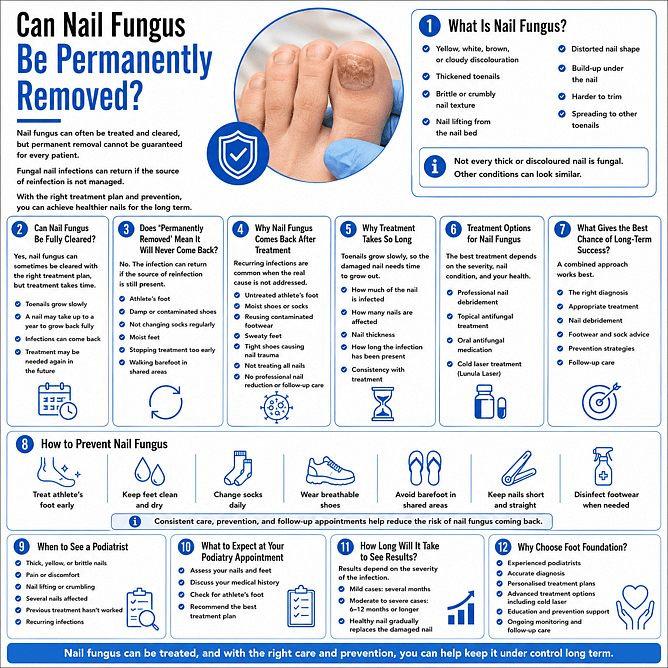
What Is Nail Fungus?
Nail fungus, also known as a fungal nail infection or onychomycosis, occurs when fungus affects the nail plate or the tissue beneath the nail.
Toenails are commonly affected because feet often spend long periods inside shoes, where warmth, moisture, and pressure can create an environment where fungus may grow.
Common signs include:
Yellow, white, brown, or cloudy nail discolouration
Thickened toenails
Brittle or crumbly nail texture
Nail lifting from the nail bed
Distorted nail shape
Build-up under the nail
Nails becoming harder to trim
Fungal changes spreading to other toenails
Not every thick or yellow nail is fungal. Nail trauma, psoriasis, eczema, pressure from footwear, ageing, and other nail problems can look similar. That is why assessment matters before choosing treatment.
Why Compare Cold Laser and Oral Medication?
Cold laser and oral medication are very different treatment options.
Cold laser is a non-invasive treatment option that uses low-level laser light across the affected nail area. It does not involve cutting, burning, removing the nail, or taking tablets.
Oral medication involves prescription antifungal tablets or capsules that work from within the body. These may be more effective for some fungal nail infections, but they are not suitable for everyone and may require medical review.
This comparison matters because choosing the wrong treatment can waste time and money. A mild early infection, a thick long-standing infection, and a multi-nail recurring infection should not all be treated the same way.
What Is Cold Laser Treatment for Nail Fungus?
Cold laser treatment, including Lunula Laser therapy, may be used as a non-invasive option for fungal nail infections.
It may be considered when:
The patient wants a non-invasive treatment option
The nail is thickened or discoloured
Home treatment has not worked
Oral medication is not preferred
Oral medication may not be suitable
Several nails are affected
The patient wants podiatry-led care and monitoring
Cold laser is not an instant cosmetic fix. Toenails grow slowly, so visible improvement depends on healthier nail growing out over time.
Research on laser therapy for fungal nails is still developing. A 2024 systematic review found that laser therapy showed promising results for onychomycosis, but also stated that larger randomised controlled trials are still needed to confirm its role as a standard treatment option.
That means cold laser should be presented honestly: it may help some patients, but it should not be sold as a guaranteed cure.
What Is Oral Medication for Nail Fungus?
Oral antifungal medication is usually prescribed through a GP or medical provider. Common examples include terbinafine and itraconazole.
Oral medication works from inside the body and may be considered when:
The infection is more severe
The whole nail is affected
Several nails are infected
Topical treatment has failed
The nail is very thickened
The patient is medically suitable
Healthify NZ explains that antifungal tablets or capsules are more effective than paints, especially when the entire nail is infected or the nail is thickened. It also notes that oral antifungal medication is commonly taken for around 3 months for toenail infections.
However, oral medication is not right for everyone. The NHS notes that a nail sample may be taken before tablets are prescribed, and blood tests may be needed before and during treatment to check liver function.
This is why oral medication should be discussed with a GP or medical provider, especially for patients taking other medications or managing other health conditions.
Cold Laser vs Oral Medication: Which Works Better?
Oral medication is often considered stronger for more severe fungal nail infections. DermNet lists oral antifungal options such as terbinafine and itraconazole and notes they are widely used because of accessibility and high efficacy, although treatment may require an extended course for toenails.
Cold laser may be useful for patients who want a non-invasive option, but the evidence is still developing. It can be worth considering, especially when paired with professional nail care, debridement, prevention advice, and monitoring.
The stronger question is not “which is better?”
The better question is:
Which treatment is better for your nail, your health, and your treatment goals?
For some patients, oral medication may be more appropriate. For others, cold laser may be a better fit. In some cases, a combined approach may be recommended.
Cold Laser May Be Better When
Cold laser may be worth considering when:
You want a non-invasive option
You prefer to avoid oral medication where appropriate
You are not suitable for oral antifungal tablets
You want podiatry-led nail care and monitoring
You have persistent fungal nail changes
You have tried home treatment without success
You are willing to follow prevention advice
You understand that results take time
Cold laser may also appeal to patients who are concerned about taking tablets or who need a treatment option that does not rely on oral medication.
Oral Medication May Be Better When
Oral antifungal medication may be more suitable when:
The infection is severe
The entire nail is affected
Several nails are infected
The nail is thickened and deeply involved
Topical treatment has failed
The patient is medically suitable
A GP confirms that tablets are appropriate
This does not mean oral medication is automatically the best choice for everyone. It means it may be stronger for certain cases, but it needs proper medical consideration.
Safety and Suitability
This is where the comparison becomes important.
Cold laser is non-invasive and does not involve taking tablets. It does not usually require blood tests or medication monitoring.
Oral medication may be effective, but it needs more medical consideration. Some patients may not be suitable because of age, other medications, liver concerns, pregnancy, breastfeeding, or other health factors. Healthify NZ notes that oral antifungal medicines may not be suitable for some people, including older people or those taking multiple other medicines.
This is why Foot Foundation should avoid saying one option is always better. The safest message is that suitability depends on the patient.
Treatment Time and Results
Neither cold laser nor oral medication gives instant cosmetic results.
Toenails grow slowly. Even if treatment is working, the damaged nail must grow out and healthier nail needs to replace it.
Treatment results depend on:
Severity of infection
Nail thickness
Number of nails affected
How long the infection has been present
Nail growth rate
Whether athlete’s foot is treated
Whether footwear causes reinfection
Whether treatment is completed properly
Whether follow-up care is done
The British Association of Dermatologists notes that toenail infections may take 12 to 18 months to clear because the nail needs time to grow out.
That is why patients need realistic expectations. Treatment may start working before the nail looks fully normal.
Can Cold Laser and Oral Medication Be Combined?
In some cases, fungal nail treatment may involve more than one approach.
A combined treatment plan may include:
Professional nail debridement
Cold laser treatment
Topical antifungal treatment
Oral medication through a GP where appropriate
Athlete’s foot treatment
Footwear and sock advice
Follow-up monitoring
Reinfection prevention
Combination care can be useful because fungal nail infections are not always isolated to the nail. Fungus can also be present on the surrounding skin, in footwear, in socks, and in damp environments.
Treating the nail while ignoring reinfection risk is a weak plan.
Why Nail Debridement Matters
Professional nail debridement can support both cold laser and oral medication plans.
Debridement involves carefully reducing thickened, damaged, or infected nail material.
This may help:
Reduce nail thickness
Improve comfort in shoes
Remove damaged nail material
Reduce pressure on the toe
Make the nail easier to manage
Improve access for topical treatment
Support monitoring of new nail growth
For thick fungal nails, debridement is often one of the most practical parts of care. It does not replace treatment, but it can make the treatment plan stronger and more comfortable.
Why Fungal Nails Come Back After Treatment
Fungal nails can return after both cold laser and oral medication if reinfection risks are not controlled.
Common reasons include:
Untreated athlete’s foot
Moist shoes or socks
Reusing contaminated footwear
Sweaty feet
Tight shoes causing nail trauma
Walking barefoot in shared wet areas
Stopping treatment too early
Not treating all affected nails
Poor follow-up care
This is why fungal nail treatment should include prevention. Without prevention, even a strong treatment option can fail long-term.
How to Choose Between Cold Laser and Oral Medication
The right treatment depends on several factors.
A podiatrist may consider:
Whether the nail is actually fungal
How many nails are affected
How much of the nail is infected
Nail thickness and damage
Whether the infection keeps returning
Whether athlete’s foot is present
Previous treatment attempts
Medical history
Medication suitability
Patient preference
Treatment expectations
The best treatment is not always the strongest treatment on paper. It is the treatment the patient can safely complete and follow properly.
When Should You See a Podiatrist?
You should consider seeing a podiatrist if:
Your nail is thick, yellow, brown, white, or crumbly
The nail is lifting from the nail bed
The nail is painful in shoes
The infection appears to be spreading
Home treatment has not worked
The infection keeps coming back
You are unsure whether the nail is fungal
You want to compare cold laser and oral medication
You have diabetes, circulation concerns, reduced sensation, or immune concerns
A podiatry assessment can help you avoid guessing and choose the right pathway.
Fungal Nail Treatment at Foot Foundation
Foot Foundation provides fungal nail assessment and treatment options for patients with thickened, discoloured, damaged, or persistent fungal toenails.
Our podiatrists can assess the nail, reduce thickened nail material where appropriate, discuss treatment options, and recommend a plan based on your needs.
Treatment may include:
Nail debridement
Cold laser treatment options
Topical antifungal support
Footwear and sock advice
Athlete’s foot management
Prevention planning
Monitoring of nail growth
GP referral support where oral medication may be suitable
Foot Foundation provides podiatry care across Auckland, Hamilton, and Tauranga.
Final Answer: Cold Laser or Oral Medication?
Cold laser and oral medication can both be useful for nail fungus, but they are not the same.
Oral medication may be more effective for some severe or widespread fungal nail infections, but it requires medical suitability and may need monitoring.
Cold laser may be worth considering for patients who want a non-invasive option, prefer to avoid tablets where appropriate, or need podiatry-led care and prevention support.
The best choice depends on the diagnosis, nail severity, medical history, and treatment goals.
The smartest next step is not guessing. It is getting the nail assessed properly and choosing the treatment plan that fits your situation.
FAQS
Is cold laser better than oral medication for nail fungus?
Not always. Oral medication may be more suitable for some severe infections, while cold laser may suit patients wanting a non-invasive option or those not suitable for tablets.
Is oral medication stronger than cold laser?
Oral antifungal medication is often considered stronger for more severe fungal nail infections, especially when the whole nail is affected. However, it is not suitable for everyone.
Is cold laser safer than oral medication?
Cold laser is non-invasive and does not involve taking tablets. Oral medication may require medical review and monitoring, especially for liver function or medication interactions.
Can I use cold laser instead of tablets?
Some patients may consider cold laser as an alternative to oral medication, but suitability depends on the nail condition and should be assessed by a podiatrist.
Can cold laser and oral medication be used together?
In some cases, fungal nail treatment may involve a combined plan, including debridement, cold laser, topical care, prevention advice, and GP-supported oral medication where appropriate.