Children’s Podiatrist in Tauranga for Foot and Walking Concerns
Children’s feet change quickly as they grow. Some changes are part of normal development, while others may need assessment if they cause pain, affect walking, or interfere with sport and daily activity.
If you are looking for a children’s podiatrist in Tauranga, early assessment can help identify whether your child’s foot concern needs treatment, monitoring, or simple reassurance. Parents often seek advice for flat feet, heel pain, frequent tripping, toe walking, in-toeing, out-toeing, or ongoing foot and leg discomfort.
At Foot Foundation, our podiatrists assess children’s foot structure, walking patterns, footwear, and lower limb function to provide practical, evidence-based care.
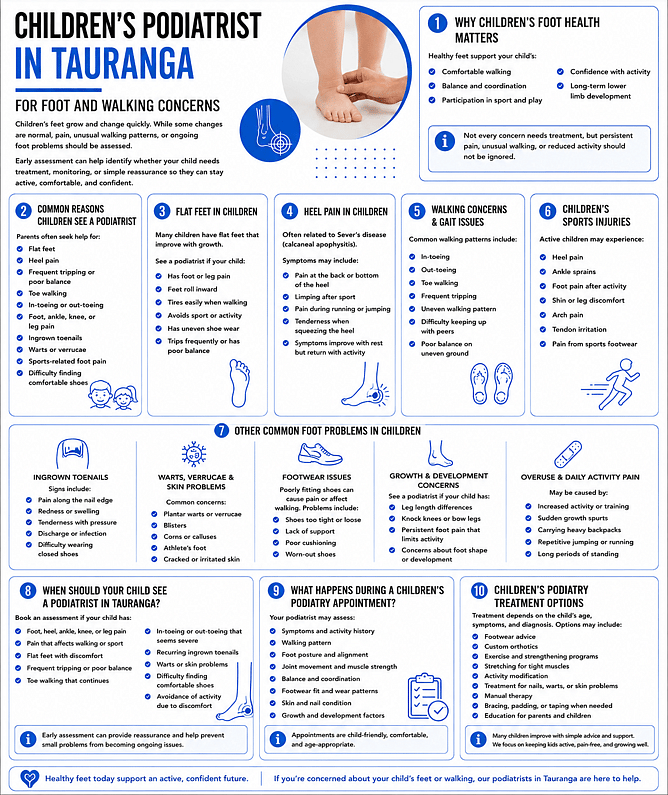
Why Children’s Foot Health Matters
Children’s feet are still developing. Their bones, joints, muscles, and ligaments continue to change as they grow, which means foot and walking concerns should be assessed carefully rather than treated like adult foot problems.
Healthy foot function can support:
Comfortable walking
Balance and coordination
Participation in sport and play
Confidence with activity
Long-term lower limb development
Not every concern needs treatment, but persistent pain, unusual walking patterns, or reduced activity should not be ignored.
Common Reasons Children See a Podiatrist
Parents may book a children’s podiatry appointment for many reasons.
Common concerns include:
Frequent tripping or poor balance
Toe walking
In-toeing or out-toeing
Foot, ankle, knee, or leg pain
Sports-related foot pain
Difficulty finding comfortable shoes
A proper assessment helps determine whether the issue is developmental, biomechanical, injury-related, or linked to footwear or activity.
Flat feet are common in young children, and many cases improve naturally as the foot develops. However, assessment may be needed if flat feet are painful, severe, or affecting movement.
Signs that flat feet may need podiatry advice include:
Foot or leg pain
Feet rolling inward
Tiredness during walking
Avoiding sport or activity
Uneven shoe wear
Poor balance or frequent tripping
Treatment is not always required. When needed, care may include footwear advice, exercises, activity guidance, or orthotic support.
Heel pain is common in active children, especially during growth periods. One common cause is Sever’s disease, also known as calcaneal apophysitis.
This condition affects the growth area at the back of the heel and is often aggravated by running, jumping, and sport.
Symptoms may include:
Pain at the back or bottom of the heel
Limping after sport
Pain during running or jumping
Tenderness when squeezing the heel
Symptoms that improve with rest but return with activity
Early treatment can help reduce pain and keep children active safely.
Walking Concerns and Gait Issues
Some children walk with their feet turned inward or outward. Others may toe walk, trip often, or appear less coordinated than expected.
Common walking concerns include:
In-toeing
Out-toeing
Toe walking
Frequent tripping
Uneven walking pattern
Difficulty keeping up with peers
Poor balance on uneven ground
Many walking patterns improve with growth, but persistent or painful issues should be assessed to rule out underlying problems.
Children’s Sports Injuries
Children who play sport or stay active can develop foot and ankle injuries from repeated load, growth changes, or sudden trauma.
Common sports-related concerns include:
Heel pain
Ankle sprains
Foot pain after activity
Shin or leg discomfort
Arch pain
Tendon irritation
Pain from sports footwear
Treatment may involve load management, footwear advice, rehabilitation exercises, or temporary activity modification.
Ingrown Toenails in Children
Ingrown toenails can be painful for children and may become infected if not treated early. They often affect the big toe and can make shoes uncomfortable.
Signs include:
Pain along the nail edge
Redness or swelling
Tenderness with pressure
Discharge or infection
Difficulty wearing closed shoes
A podiatrist can safely treat the painful nail edge and provide advice to reduce recurrence.
Warts, Verrucae, and Skin Problems
Children can develop skin conditions on the feet, especially from shared spaces, sport, swimming, or footwear friction.
Common concerns include:
Plantar warts or verrucae
Blisters
Corns or calluses
Athlete’s foot
Cracked or irritated skin
If a skin problem is painful, spreading, or not improving, professional podiatry care may help.
When Should a Child See a Podiatrist in Tauranga?
You should consider booking an assessment if your child has:
Foot, heel, ankle, knee, or leg pain
Pain that affects walking or sport
Flat feet with discomfort
Frequent tripping or poor balance
Toe walking that continues
In-toeing or out-toeing that seems severe
Recurring ingrown toenails
Warts or painful skin problems
Difficulty finding comfortable shoes
Avoidance of activity due to discomfort
Early assessment can provide reassurance and help prevent small problems from becoming ongoing issues.
What Happens During a Children’s Podiatry Appointment?
A children’s podiatry appointment is designed to be comfortable, practical, and age-appropriate.
Your podiatrist may assess:
Symptoms and activity history
Walking pattern
Foot posture and alignment
Joint movement
Muscle strength
Balance and coordination
Footwear fit and wear patterns
Skin and nail condition
Growth and development factors
The goal is to understand whether the concern is part of normal development or whether treatment may help.
Children’s Podiatry Treatment Options
Treatment depends on the child’s age, symptoms, and diagnosis. Not every child needs active treatment.
Options may include:
Footwear advice
Activity or load management
Stretching or strengthening exercises
Balance and coordination exercises
Orthotic support when appropriate
Nail care for ingrown toenails
Treatment for warts or skin concerns
Rehabilitation after injury
Care is tailored to the child, not applied as a one-size-fits-all plan.
Why Early Assessment Matters
Children often adapt to pain by changing how they walk, avoiding sport, or reducing activity. This can make the problem harder to notice until it has been present for some time.
Early assessment may help:
Reduce pain
Improve walking confidence
Support activity participation
Prevent recurring issues
Guide footwear choices
Reassure parents when no treatment is needed
The earlier the cause is identified, the easier it is to manage.
Children’s Podiatry Care at Foot Foundation Tauranga
Foot Foundation provides children’s podiatry care in Tauranga for foot pain, heel pain, walking concerns, nail problems, skin conditions, and sports-related injuries.
Our Tauranga clinic is located at:
Patients can access assessment, diagnosis, footwear advice, orthotic support where appropriate, rehabilitation guidance, and ongoing podiatry care.
Our approach focuses on clear communication, practical treatment, and supporting healthy movement as children grow.
Book a Children’s Podiatrist in Tauranga
If your child is experiencing foot pain, heel pain, walking changes, frequent tripping, or recurring nail or skin problems, early assessment can provide clarity and reassurance.
Foot Foundation provides children’s podiatry care in Tauranga to help support comfort, movement, and healthy foot development.