Ingrown Toenail Treatment in Tauranga for Fast Pain Relief
An ingrown toenail can start as mild discomfort but quickly become painful, swollen, and difficult to ignore. For many people, the pain becomes worse in shoes, during walking, or when pressure is placed on the side of the toe.
If you are looking for ingrown toenail treatment in Tauranga, early care is important. Trying to cut the nail deeper at home may give short-term relief, but it can also make the problem worse or increase the risk of infection.
At Foot Foundation, our podiatrists provide ingrown toenail treatment in Tauranga to relieve pain, manage infection, and help prevent the nail from becoming a recurring problem.
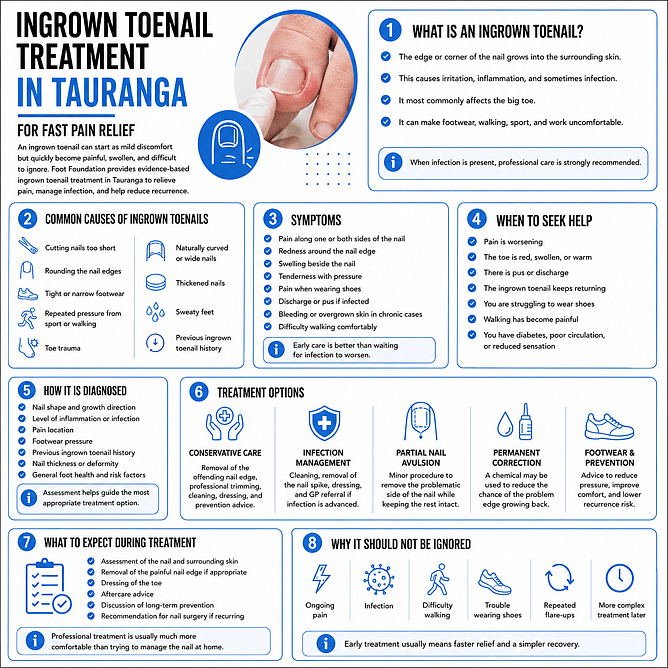
What Is an Ingrown Toenail?
An ingrown toenail occurs when the edge or corner of the nail grows into the surrounding skin. This causes irritation, inflammation, and sometimes infection.
It most commonly affects the big toe, although other toes can also be affected. The condition may develop gradually or become painful quite quickly, especially if the nail edge pierces the skin.
Ingrown toenails can affect daily comfort, footwear, walking, sport, and work. When infection is present, professional care is strongly recommended.
Common Causes of Ingrown Toenails
Ingrown toenails can happen for several reasons. In many cases, more than one factor is involved.
Common causes include:
Cutting toenails too short
Rounding the nail edges instead of cutting straight across
Tight or narrow footwear
Repeated pressure from sport or walking
Toe trauma, such as stubbing the toe
Naturally curved or wide nail shape
Thickened nails
Sweaty feet increasing skin softness around the nail
Previous ingrown toenail history
Understanding the cause matters because treatment should not only relieve the current pain but also reduce the chance of the problem returning.
Symptoms of an Ingrown Toenail
Symptoms may vary depending on how advanced the condition is.
Common symptoms include:
Pain along one or both sides of the toenail
Redness around the nail edge
Swelling beside the nail
Tenderness when pressure is applied
Pain when wearing shoes
Discharge or pus if infected
Bleeding or overgrown skin in chronic cases
Difficulty walking comfortably
If there is redness, swelling, discharge, or increasing pain, it is better to seek podiatry care early rather than waiting for the infection to worsen.
When an Ingrown Toenail Becomes More Serious
Some ingrown toenails settle when caught early, but others continue to worsen. A painful nail should not be ignored if infection or recurring inflammation is present.
You should book an assessment if:
Pain is worsening
The toe is red, swollen, or warm
There is pus or discharge
The ingrown toenail keeps returning
You are struggling to wear shoes
Walking has become painful
You have diabetes, poor circulation, or reduced sensation
Patients with diabetes, circulation concerns, or immune system issues should avoid self-treatment and seek professional care promptly.
How Ingrown Toenails Are Diagnosed
At Foot Foundation, diagnosis is usually made through a clinical assessment of the nail, skin, and surrounding tissue.
Your podiatrist may assess:
Nail shape and growth direction
Level of inflammation or infection
Pain location
Footwear pressure
Previous ingrown toenail history
Nail thickness or deformity
General foot health and risk factors
This allows your podiatrist to recommend the most appropriate treatment option based on the severity of the nail problem.
Ingrown Toenail Treatment Options in Tauranga
Treatment depends on how painful, infected, or recurring the ingrown toenail is. The goal is to relieve pain, reduce inflammation, and prevent recurrence where possible.
Conservative Ingrown Toenail Treatment
For early or mild cases, conservative treatment may be enough.
This may include:
Careful removal of the offending nail edge
Professional nail trimming
Cleaning and dressing the area
Footwear advice to reduce pressure
Guidance on safe nail cutting
Advice to reduce recurrence
This can provide fast relief when the nail edge is causing irritation but the problem is not severe or recurring.
Infection Management
If infection is present, the area needs careful podiatry management. Your podiatrist may clean the area, remove the nail spike or painful edge, dress the toe, and provide advice on infection care.
If infection is more advanced, referral to a GP may be recommended for antibiotics or further medical support.
Partial Nail Avulsion
For painful or recurring ingrown toenails, a minor nail procedure may be recommended. This is commonly called partial nail avulsion.
During this procedure, the problematic side of the nail is removed while keeping the rest of the nail intact. A local anaesthetic is used to keep the procedure comfortable.
This option is often recommended when the nail repeatedly grows into the skin or when conservative treatment has not solved the issue.
Permanent Ingrown Toenail Correction
For ongoing cases, a chemical may be applied to the nail root to reduce the chance of the problem edge growing back.
This can provide a long-term solution for patients who experience repeated ingrown toenails.
Footwear and Prevention Advice
Footwear can play a major role in ingrown toenails. Shoes that are too tight, narrow, or shallow may place pressure on the nail edge and worsen symptoms.
Your podiatrist may recommend footwear changes to reduce compression and improve comfort while the nail heals.
What to Expect During Treatment
Many patients worry that ingrown toenail treatment will be painful. In reality, professional treatment is usually much more comfortable than trying to manage the nail at home.
Your appointment may include:
Assessment of the nail and surrounding skin
Removal of the painful nail edge if appropriate
Dressing of the toe
Advice on aftercare
Discussion of long-term prevention
Recommendation for nail surgery if the issue is recurring
The treatment approach depends on how severe the ingrown toenail is and whether infection is present.
Why Ingrown Toenails Should Not Be Ignored
Ignoring an ingrown toenail can make the problem harder to treat. Once the nail edge continues to press into the skin, inflammation often increases and infection can develop.
Untreated ingrown toenails may lead to:
Ongoing pain
Infection
Difficulty walking
Trouble wearing shoes
Repeated flare-ups
More complex treatment later
Early treatment usually means faster relief and a simpler recovery.
Ingrown Toenail Treatment at Foot Foundation Tauranga
Foot Foundation provides ingrown toenail treatment in Tauranga for patients experiencing nail pain, swelling, infection, or recurring ingrown toenails.
Our Tauranga clinic is located at:
Patients can access podiatry care for ingrown toenails, nail pain, fungal nails, foot pain, walking pain, skin conditions, and general podiatry needs.
Our approach focuses on relieving pain, treating the cause, and helping reduce the chance of recurrence.
If your toenail is painful, swollen, infected, or keeps growing into the skin, early treatment is the best next step.
Foot Foundation provides ingrown toenail treatment in Tauranga to help relieve pain, restore comfort, and prevent the problem from becoming worse.