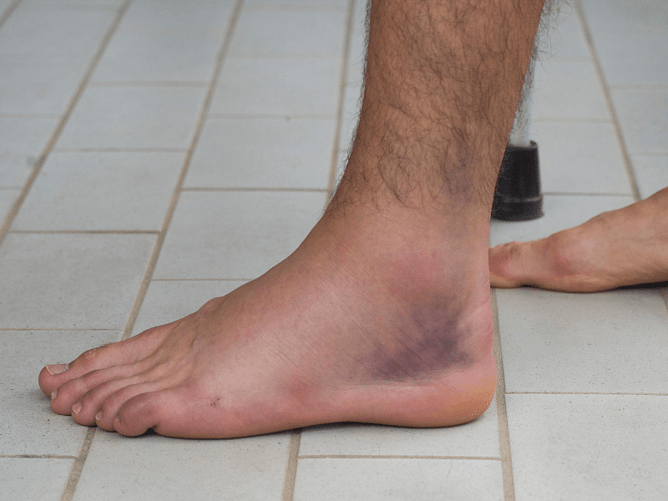
Chronic Ankle Instability: Causes, Symptoms and Treatment
Chronic ankle instability is a common condition where the ankle repeatedly “gives way”, particularly during walking, sport, or on uneven ground. It often develops after one or more ankle sprains that were not fully rehabilitated.
While many people assume their ankle is simply “weak”, the issue is more complex. Chronic instability involves ligament laxity, reduced joint awareness (proprioception), and muscle control deficits. Without proper treatment, this can lead to repeated injuries, reduced performance, and long-term joint damage.
At Foot Foundation, care focuses on identifying the underlying cause of instability and restoring strength, balance, and movement control. Treatment is structured to reduce recurrence risk and rebuild confidence in the ankle.
What Is Chronic Ankle Instability?
Chronic ankle instability (CAI) is a condition characterised by repeated ankle sprains and a persistent feeling of the ankle being unstable or unreliable.
It typically develops when ligaments do not heal properly after an initial sprain, combined with deficits in neuromuscular control. Over time, this leads to poor joint stability and increased risk of further injury.
If left untreated, chronic instability may contribute to:
Early ankle arthritis
Cartilage damage (osteochondral lesions)
Persistent pain and swelling
Reduced mobility and performance
Early intervention significantly improves long-term outcomes.
Causes and Risk Factors
Chronic ankle instability usually develops due to a combination of structural and functional issues.
Common causes and contributing factors include:
Previous ankle sprains
Incomplete or inadequate rehabilitation
Ligament laxity or hypermobility
Weak peroneal muscles
Poor balance and proprioception
Foot mechanics such as flat feet or high arches
Participation in high-risk sports
Poor footwear lacking lateral support
Training or walking on uneven surfaces
A previous ankle sprain is the strongest predictor of future instability.
Symptoms of Chronic Ankle Instability
Symptoms are often ongoing rather than sudden.
Patients commonly report:
Recurrent ankle sprains
A feeling of the ankle “giving way”
Ongoing pain or discomfort
Swelling after activity
Difficulty walking on uneven ground
Poor balance or coordination
Reduced confidence in movement
These symptoms often worsen without targeted rehabilitation.
How Chronic Ankle Instability Is Diagnosed
A detailed assessment is required to identify both structural and functional deficits.
At Foot Foundation, diagnosis includes:
Detailed injury history
Ligament stability testing
Strength and balance assessment
Gait and movement analysis
Foot posture and biomechanics review
Imaging may be required in some cases:
Ultrasound for ligament integrity
MRI for cartilage injury or deeper joint damage
This ensures treatment is precise and not generic.
Evidence-Based Treatment at Foot Foundation
Treatment focuses on restoring stability, not just reducing symptoms.
Balance and Proprioception Training
Improves joint awareness and reduces risk of re-injury
Strengthening Programmes
Targets peroneal muscles, calf, and intrinsic foot muscles
Custom Orthotics
Improves alignment and reduces excessive strain
Functional Bracing or Strapping
Provides short-term support during sport or activity
Manual Therapy
Restores joint mobility and reduces stiffness
Shockwave Therapy
Used for chronic ligament pain or scar tissue
Return-to-Sport Rehabilitation
Progressive, sport-specific loading programmes
Referral Pathways
Orthopaedic referral in severe or non-responsive cases
When to Seek Professional Care
Assessment is recommended if:
Your ankle repeatedly gives way
You have had multiple ankle sprains
Pain or swelling persists
You feel unstable during walking or sport
You lack confidence in your ankle
Ignoring these symptoms increases the risk of long-term joint damage.
Preventing Recurrence
Long-term prevention requires more than rest.
Key strategies include:
Completing full rehabilitation after injury
Strengthening ankle and lower leg muscles
Improving balance and coordination
Wearing supportive footwear
Using orthotics when indicated
Managing training loads appropriately
Rehabilitation is the difference between recovery and recurrence.
Chronic Ankle Instability Treatment in Auckland
Foot Foundation provides specialist care across Auckland, including:
Remuera – Suite 5/102 Remuera Road
Botany – 110 Michael Jones Drive
Pinehill – 50 Greville Road
Smales Farm – 74 Taharoto Road
Treatment focuses on restoring ankle stability, improving movement control, and preventing repeated injuries.
Chronic Ankle Instability Treatment in Hamilton
Care is available across Hamilton locations, including:
Hamilton Central – 7/127 Collingwood Street
Hamilton East – 16 Beale Street
Patients receive structured rehabilitation programmes, orthotic support, and long-term injury prevention strategies.
Chronic Ankle Instability Treatment in Tauranga
At our Tauranga clinic:
Tauranga (Bethlehem) – 253A State Highway 2
Treatment is focused on rebuilding stability, restoring confidence in movement, and reducing the risk of future ankle sprains.