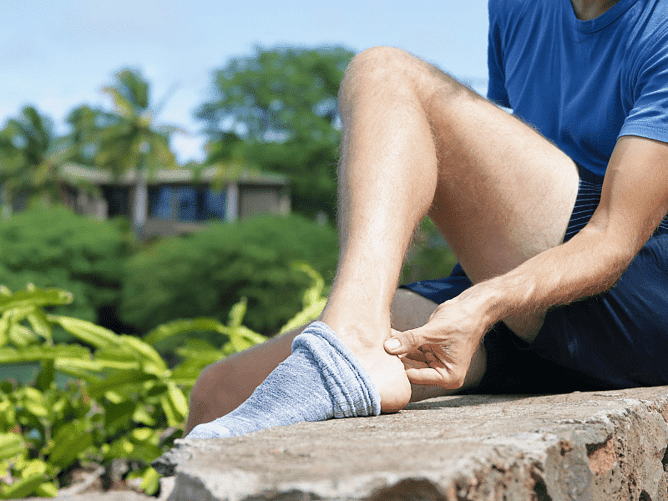
Achilles Rupture Treatment at Foot Foundation
An Achilles rupture is a serious injury involving a partial or complete tear of the Achilles tendon. It often occurs suddenly and is commonly described as a sharp “pop” or snapping sensation at the back of the leg.
This injury can significantly affect walking, balance, and the ability to push off the foot. Many patients report feeling as though they have been struck or kicked in the back of the leg, followed by immediate weakness and difficulty moving.
Achilles ruptures are most common during explosive movements such as sprinting, jumping, or sudden direction changes. Without prompt assessment and appropriate management, long-term weakness and re-rupture risk can increase.
At Foot Foundation, assessment is prioritised to determine the severity of the injury and ensure appropriate referral or rehabilitation. Care is tailored for both surgical and non-surgical pathways, with a strong focus on restoring strength, mobility, and safe return to activity.
What Is an Achilles Rupture?
An Achilles rupture is a tear of the Achilles tendon, which connects the calf muscles to the heel bone and is essential for walking, running, and jumping.
The injury may be partial or complete. A complete rupture typically results in a full loss of tendon continuity, while partial tears involve damage to a portion of the tendon fibres.
Unlike gradual tendon pain conditions, rupture is an acute event. It usually occurs during high-load activity when the tendon is suddenly stretched beyond its capacity.
Immediate assessment is critical, as complete ruptures often require urgent surgical consultation within a short time window for optimal outcomes.
Causes and Risk Factors
Achilles ruptures often occur in individuals who place sudden, high loads on the tendon, particularly if the tendon has already been weakened.
Common causes and contributing factors include:
Sudden explosive movements such as sprinting, jumping, or pushing off
Participation in sports like basketball, football, squash, or tennis
Middle-aged recreational athletes returning to sport without adequate conditioning
Pre-existing Achilles tendinopathy
Poor warm-up or reduced physical conditioning
Limited calf flexibility or strength
Use of certain medications such as fluoroquinolone antibiotics or corticosteroids
Systemic conditions including diabetes or inflammatory arthritis
Previous Achilles injury
These factors increase the likelihood of tendon failure under load.
Symptoms of an Achilles Rupture
Symptoms are typically immediate and difficult to ignore.
Patients commonly report:
A sudden “pop” or snapping sensation in the back of the leg
Sharp pain at the time of injury
Difficulty or inability to walk normally
Inability to push off the affected foot
Swelling or bruising in the calf or ankle
A noticeable gap in the tendon in complete ruptures
Weakness or loss of strength when pointing the foot downward
Despite the severity, some patients are still able to walk, which can delay diagnosis. This is why proper assessment is essential.
How Achilles Rupture Is Diagnosed
Diagnosis is based on clinical examination supported by imaging when required.
Assessment at Foot Foundation includes:
Clinical examination of the calf and tendon
Thompson squeeze test to assess tendon function
Palpation to identify a gap in the tendon
Functional assessment of push-off strength
Gait evaluation
Imaging may include:
Ultrasound to confirm tendon disruption
MRI in complex or unclear cases
Complete ruptures require urgent referral to orthopaedic specialists. Partial ruptures may be managed conservatively under structured care.
Evidence-Based Treatment at Foot Foundation
Treatment depends on whether the rupture is partial or complete.
Immediate Referral for Complete Ruptures
Surgical repair is often required within the first one to two weeks to optimise recovery.
Post-Operative Rehabilitation
Rehabilitation focuses on restoring strength, improving mobility, and gradually reintroducing load.
Conservative Management
Partial ruptures may be treated without surgery using immobilisation and structured rehabilitation.
Orthotics and Footwear Support
Heel lifts and supportive footwear reduce tendon strain during healing.
Strengthening and Conditioning
Progressive programmes rebuild calf strength and tendon capacity.
Gait Retraining
Restores normal walking patterns and reduces compensatory strain.
When to Seek Urgent Care
Immediate assessment is required if:
You felt a sudden pop in the back of your leg
You cannot push off your foot
Walking feels weak or unstable
Swelling or bruising develops quickly
There is a visible or palpable gap in the tendon
Delaying assessment increases the risk of poor healing and long-term dysfunction.
Preventing Achilles Rupture
While not all ruptures can be prevented, risk can be reduced through appropriate preparation and load management.
Key strategies include:
Gradual progression of training intensity
Regular calf strengthening and conditioning
Proper warm-up before sport
Wearing appropriate footwear
Managing early tendon pain before it worsens
Avoiding sudden spikes in activity
Addressing early symptoms is one of the most effective ways to prevent rupture.
Achilles Rupture Treatment in Auckland
Foot Foundation provides Achilles rupture assessment and rehabilitation across Auckland, including:
Remuera – Suite 5/102 Remuera Road
Botany – 110 Michael Jones Drive
Pinehill – 50 Greville Road
Smales Farm – 74 Taharoto Road
Early diagnosis and structured rehabilitation are prioritised to restore strength, improve mobility, and support safe recovery following Achilles rupture.
Achilles Rupture Treatment in Hamilton
In Hamilton, comprehensive Achilles care is available at:
Hamilton Central – 7/127 Collingwood Street
Hamilton East – 16 Beale Street
Patients receive tailored rehabilitation programmes, orthotic support, and coordinated referral pathways for surgical management where required.
Achilles Rupture Treatment in Tauranga
At our Tauranga clinic:
Tauranga (Bethlehem) – 253A State Highway 2
Treatment focuses on restoring function, reducing the risk of re-rupture, and guiding a safe return to sport and daily activity.