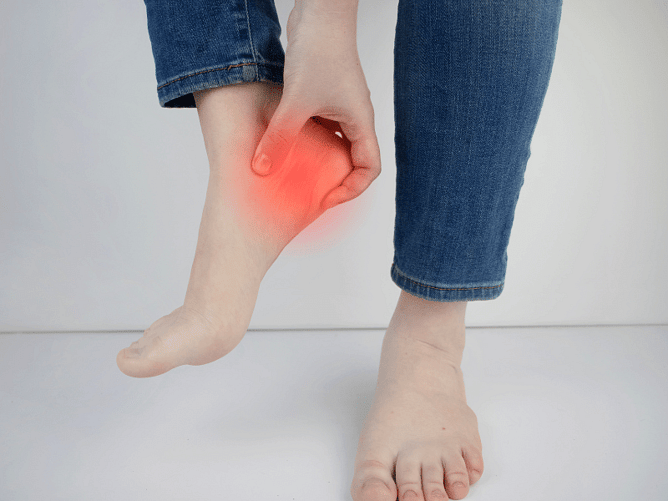
Retrocalcaneal Bursitis Treatment at Foot Foundation
Retrocalcaneal bursitis is a common cause of pain at the back of the heel, particularly where the Achilles tendon meets the heel bone. This condition can make walking, running, climbing stairs, and wearing shoes uncomfortable, especially footwear with firm heel counters.
The condition occurs when the bursa, a small fluid-filled sac designed to reduce friction, becomes irritated or compressed between the Achilles tendon and the calcaneus. Over time, this irritation can lead to inflammation, swelling, and persistent heel pain.
Retrocalcaneal bursitis often develops alongside insertional Achilles tendinopathy or structural changes such as Haglund’s deformity. Without appropriate management, symptoms can become chronic and increasingly limiting.
At Foot Foundation, treatment focuses on reducing mechanical compression, improving movement patterns, and restoring pain-free function through evidence-based care.
What Is Retrocalcaneal Bursitis?
Retrocalcaneal bursitis is inflammation of the bursa located between the Achilles tendon and the heel bone. Under normal conditions, this structure allows smooth gliding of the tendon during movement.
When repetitive stress or compression occurs, the bursa becomes inflamed. This leads to pain, swelling, and sensitivity at the back of the heel.
Unlike surface irritation from footwear, this condition occurs deeper within the heel, often making it more persistent and slower to resolve without targeted treatment.
Causes and Risk Factors
Retrocalcaneal bursitis rarely develops from a single event. It is typically the result of repeated mechanical stress combined with underlying contributing factors.
Common causes include:
Repetitive ankle dorsiflexion from running, jumping, or stair climbing
Footwear with rigid or tight heel counters
Haglund’s deformity causing increased pressure at the heel
Insertional Achilles tendon overload
Direct pressure or friction at the back of the heel
Sudden increase in activity or training load
High-impact sports and running activities
Systemic inflammatory conditions such as arthritis
Understanding these drivers is essential, as treatment must address both the irritation and the underlying mechanical cause.
Symptoms of Retrocalcaneal Bursitis
Symptoms may begin gradually but can progress if the condition is not managed early.
Patients commonly report:
Pain at the back of the heel, deep to the Achilles tendon
Swelling or fullness in the heel region
Redness and warmth in more acute cases
Pain when wearing shoes, especially those with firm heel support
Discomfort during uphill walking, running, or stair climbing
Tenderness when squeezing the sides of the heel near the tendon
In more advanced cases, pain may persist even at rest or after activity.
How Retrocalcaneal Bursitis Is Diagnosed
Accurate diagnosis is essential, as symptoms can overlap with Achilles tendon conditions.
Assessment at Foot Foundation includes:
Clinical history and symptom pattern review
Palpation to identify bursa irritation
Differentiation from insertional Achilles tendinopathy
Gait and biomechanical assessment
Footwear evaluation
Where required, imaging may be used:
Ultrasound to confirm fluid within the bursa
X-ray to assess for Haglund’s deformity
MRI in complex or persistent cases
This ensures treatment targets the correct structure and avoids mismanagement.
Evidence-Based Treatment at Foot Foundation
Treatment is tailored to the severity of symptoms and underlying biomechanical factors.
Footwear Modification
Shoes with soft heel counters and adequate cushioning reduce pressure on the bursa.
Heel Lifts
Temporary heel elevation reduces compressive load at the back of the heel.
Custom Orthotics
Orthotics improve foot mechanics and reduce strain on the tendon–bursa interface.
Shockwave Therapy (ESWT)
Used in chronic cases to stimulate tissue healing and reduce persistent pain.
Manual Therapy and Calf Stretching
Improves ankle mobility and reduces tension contributing to compression.
Strapping and Padding
Protects the heel from friction and reduces irritation from footwear.
Injection Therapy (Referral)
Corticosteroid injections may be considered in resistant cases, used cautiously due to tendon risk.
Surgical Referral
In cases involving significant Haglund’s deformity or persistent symptoms, referral for surgical management may be appropriate.
When to Seek Professional Care
Assessment is recommended if:
Pain persists beyond two weeks
Symptoms worsen with activity
Heel pain limits walking or exercise
Swelling or redness increases
Footwear becomes difficult to tolerate
Early treatment reduces recovery time and prevents chronic irritation.
Preventing Recurrence
Long-term management focuses on reducing mechanical stress and improving load tolerance.
Strategies include:
Wearing appropriate footwear with adequate heel support
Gradually increasing activity levels
Maintaining calf flexibility and strength
Addressing biomechanical issues early
Avoiding prolonged pressure on the heel
Preventive care plays a key role in avoiding repeated flare-ups.
Retrocalcaneal Bursitis Treatment in Auckland
Foot Foundation provides specialist assessment and treatment for heel pain across Auckland, including:
Remuera – Suite 5/102 Remuera Road
Botany – 110 Michael Jones Drive
Pinehill – 50 Greville Road
Smales Farm – 74 Taharoto Road
Care focuses on accurate diagnosis, reducing tendon–bursa compression, and delivering tailored rehabilitation for long-term relief.
Retrocalcaneal Bursitis Treatment in Hamilton
Patients in Hamilton can access comprehensive care at:
Hamilton Central – 7/127 Collingwood Street
Hamilton East – 16 Beale Street
Treatment includes orthotics, shockwave therapy, and structured rehabilitation programmes to relieve heel pain and restore function.
Retrocalcaneal Bursitis Treatment in Tauranga
At our Tauranga clinic:
Tauranga (Bethlehem) – 253A State Highway 2
Treatment focuses on reducing pain, improving movement, and supporting long-term recovery from Achilles and heel conditions.