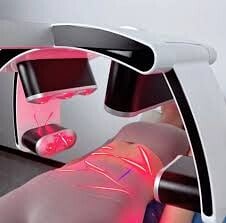
Low-Level Laser Therapy: How It Works and Who It Can Help
If you’ve been struggling with ongoing pain in your feet, legs, or lower back, you may have heard about low-level laser therapy (LLLT) — sometimes called cold laser therapy or photobiomodulation.
This non-invasive treatment is becoming increasingly popular in musculoskeletal care because it aims to reduce pain, calm inflammation, and support tissue healing — without injections or medication.
At Foot Foundation, we use evidence-informed technologies like low-level laser therapy to support recovery and help patients return to the activities they enjoy.
What Is Low-Level Laser Therapy?
Low-level laser therapy is a non-thermal light treatment that delivers specific wavelengths of light energy into body tissues.
Unlike surgical lasers, LLLT:
Does not cut or burn tissue
Produces minimal heat
Is generally comfortable and well tolerated
Is delivered through a handheld clinical device
The goal is to stimulate the body’s natural healing processes at a cellular level — a process known as photobiomodulation.
How Does Low-Level Laser Therapy Work?
LLLT works by allowing light photons to penetrate the skin and interact with cells, particularly within the mitochondria (the “energy producers” of the cell).
Research suggests this may:
✅ Increase cellular energy (ATP production)
✅ Support tissue repair and regeneration
✅ Improve local circulation
✅ Reduce inflammatory mediators
✅ Modulate pain signalling pathways
In simple terms, the therapy aims to help injured or irritated tissues function more efficiently and recover more effectively.
What Conditions May Benefit?
Low-level laser therapy is commonly used as part of a broader rehabilitation plan for many musculoskeletal conditions.
Foot and Ankle Conditions
Plantar fasciitis
Achilles tendinopathy
Heel pain
Tibialis posterior dysfunction
Peroneal tendon irritation
Ankle sprains
Joint stiffness
Lower Limb Conditions
Shin splints
Patellar tendon pain
Muscle strains
Soft tissue inflammation
Overuse injuries
Lower Back and Hip Conditions
Mechanical lower back pain
Gluteal tendinopathy
Sacroiliac joint irritation
Muscular tightness and trigger points
At Foot Foundation, laser therapy is typically used alongside active rehabilitation, footwear advice, orthotic therapy, or manual therapy where appropriate.
What Are the Potential Benefits?
While individual results vary, patients often report:
Reduced pain levels
Improved movement comfort
Decreased tissue sensitivity
Support for tendon and soft tissue recovery
A non-invasive treatment option
Importantly, LLLT is not usually a standalone cure, but rather a supportive modality within a comprehensive treatment plan.
What Does Treatment Feel Like?
Most patients find laser therapy very comfortable.
During treatment:
The clinician places the probe over the affected area
You may feel gentle warmth or nothing at all
Sessions are typically quick
No downtime is required afterward
Many patients return immediately to normal daily activities.
Is Low-Level Laser Therapy Safe?
When delivered by trained clinicians using appropriate protocols, low-level laser therapy has a strong safety profile.
However, it may not be suitable in certain situations, such as:
Over areas of known malignancy
Directly over the eyes
In some pregnancy scenarios (area-dependent)
At Foot Foundation, your clinician will always assess whether laser therapy is appropriate for your specific condition.
How Many Sessions Are Usually Needed?
The number of sessions varies depending on:
The condition being treated
Whether the issue is acute or chronic
Your overall rehabilitation plan
How your body responds
Many treatment plans involve a short course of sessions combined with active rehabilitation strategies for best results.
Is There Good Evidence for Laser Therapy?
Research into photobiomodulation has grown significantly over the past two decades.
Systematic reviews suggest that, when appropriate wavelengths and dosing are used, low-level laser therapy may help reduce pain and improve function in certain musculoskeletal conditions — particularly tendinopathies and soft tissue injuries.
However, outcomes can vary depending on:
Device quality
Treatment parameters
Clinical diagnosis
Integration with active rehab
This is why individualised assessment remains essential.
Is Low-Level Laser Therapy Right for You?
If you are dealing with persistent foot, leg, or lower back pain that is not settling with rest alone, low-level laser therapy may be a useful adjunct within a structured treatment plan.
At Foot Foundation, our clinicians assess:
The source of your pain
Contributing biomechanical factors
Load and activity patterns
Whether technologies like laser therapy are appropriate
Book a Consultation
If you’d like to find out whether low-level laser therapy could help your condition, our team at Foot Foundation is here to help.
👉 Book an appointment today
🌐 www.footfoundation.co.nz
📞 (09) 922 6830 | (07) 949 7607
📧 reception@footfoundation.co.nz