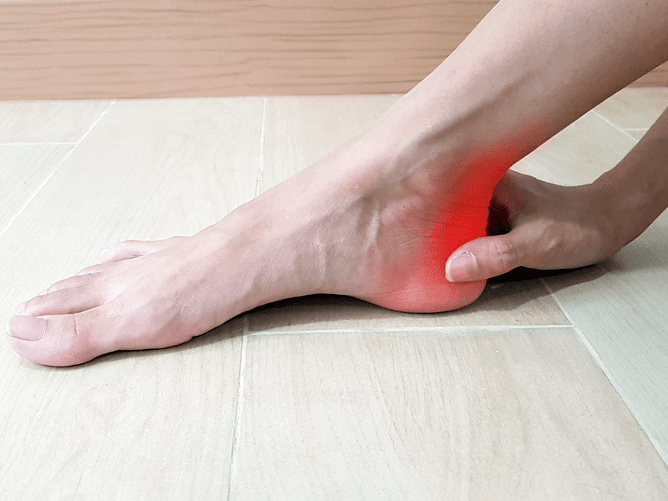
Insertional Achilles Tendinopathy: Causes, Symptoms, and Treatment
Insertional Achilles tendinopathy is a common cause of pain at the back of the heel, occurring where the Achilles tendon attaches directly to the heel bone. This condition can make walking, climbing stairs, running, and even wearing certain shoes uncomfortable.
Unlike mid-portion Achilles tendinopathy, insertional tendinopathy involves compressive and tensile stress at the tendon–bone interface. Over time, repetitive loading may lead to tendon degeneration, microtearing, calcification, or bone spur formation. Without appropriate treatment, symptoms often persist and may progressively limit activity.
Common causes of insertional Achilles pain include biomechanical overload, calf tightness, restricted ankle mobility, poor footwear, and sudden increases in training intensity. The condition is frequently seen in runners, active adults, and individuals who spend long hours on their feet.
At Foot Foundation, our podiatrists provide evidence-based treatment for insertional Achilles tendinopathy, focusing on reducing tendon strain, restoring mobility, and supporting long-term recovery. Care may include structured loading programmes, shockwave therapy, orthotics, footwear guidance, and rehabilitation planning.
What Is Insertional Achilles Tendinopathy?
Insertional Achilles tendinopathy affects the lower portion of the Achilles tendon at its attachment to the posterior calcaneus (heel bone). This region experiences significant mechanical demand during movement, yet has a relatively limited blood supply, making healing slower once injury develops.
Rather than being purely inflammatory, insertional tendinopathy represents a failed healing response. Repetitive stress disrupts the tendon’s collagen structure, reducing its ability to tolerate load and leading to pain, stiffness, and functional limitation.
Activities involving deep ankle bending — such as uphill walking, stair climbing, or squatting — commonly aggravate symptoms. Footwear with rigid heel counters may also increase compression at the tendon insertion.
Causes and Risk Factors
Insertional Achilles tendinopathy typically develops from cumulative strain rather than a single injury.
Key contributors include:
Repetitive overload at the tendon insertion
Compressive stress from ankle dorsiflexion
Flat feet or high arches altering load distribution
Restricted ankle mobility
Poor footwear lacking cushioning
Calf tightness increasing tendon strain
Age-related tendon degeneration
Haglund’s deformity causing mechanical irritation
High sporting or occupational load
Identifying these factors is essential for guiding effective treatment and helping prevent recurrence.
Symptoms of Insertional Achilles Tendinopathy
Symptoms often develop gradually but may become persistent if left untreated.
Patients commonly report:
Pain directly at the back of the heel
Morning stiffness that improves with movement
Pain after activity or prolonged standing
Tenderness when squeezing the tendon
Swelling or thickening in chronic cases
Discomfort from footwear pressing on the heel
As the condition progresses, everyday walking may become increasingly uncomfortable.
How Insertional Achilles Tendinopathy Is Diagnosed
Accurate diagnosis is important, as heel pain can also arise from bursitis, partial tears, or other tendon disorders.
Assessment at Foot Foundation typically includes:
Detailed clinical history
Physical examination and tendon palpation
Functional testing such as single-leg heel raises
Strength and endurance evaluation
Gait and biomechanical assessment
Footwear review
Where symptoms are persistent or complex, imaging such as ultrasound or MRI may be recommended to confirm degenerative changes and rule out partial tendon tears.
Evidence-Based Treatment at Foot Foundation
Treatment is tailored to symptom severity, activity level, and underlying biomechanics.
Modified Loading Programmes
Progressive strengthening supports tendon recovery while avoiding excessive ankle dorsiflexion.
Shockwave Therapy (ESWT)
Shockwave stimulates tissue healing and is particularly effective in chronic cases.
Custom Orthotics
Orthotics improve foot mechanics and reduce strain at the tendon insertion.
Heel Lifts
Temporary heel elevation reduces compressive forces during painful stages.
Footwear Advice
Supportive, cushioned shoes that avoid rigid heel counters help minimise irritation.
Manual Therapy and Calf Release
Improving calf flexibility reduces tension on the tendon.
Surgical Referral
In severe cases involving significant calcification or bone spurs, referral for orthopaedic evaluation may be recommended.
When to Seek Professional Care
Assessment is recommended if:
Pain persists beyond two weeks
Symptoms worsen with activity
Morning stiffness becomes pronounced
The tendon appears thickened
Walking or exercise is limited
Early intervention improves recovery timelines and helps reduce the risk of chronic tendon degeneration.
Preventing Insertional Achilles Tendon Injury
Preventive strategies include:
Gradually increasing activity levels
Maintaining calf strength and flexibility
Wearing supportive footwear
Addressing biomechanical issues early
Allowing adequate recovery between training sessions
Proactive care plays an important role in supporting long-term tendon health and reducing the likelihood of recurrence.
Insertional Achilles Tendinopathy Treatment in New Zealand
Foot Foundation provides specialist Achilles tendon care across Auckland, Hamilton, and Tauranga, combining podiatry and physiotherapy expertise to deliver comprehensive rehabilitation.
If heel pain is limiting your movement, early assessment can help restore function and prevent long-term complications.