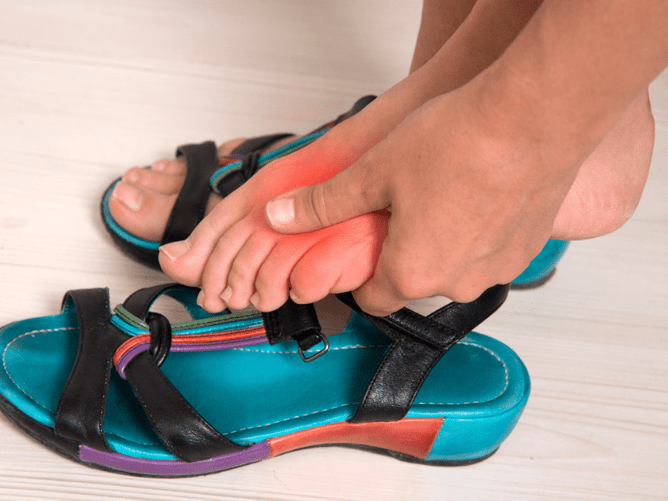
The midfoot forms the central section of the foot and plays a pivotal role in stability, shock absorption, and load transfer. Structurally, it comprises the navicular, cuboid, and three cuneiform bones, which join to the forefoot through the Lisfranc joint complex. This region supports the medial arch and acts as a rigid lever during propulsion, making it essential for efficient walking and running mechanics.
Because of its central function, the midfoot endures considerable stress during daily activity. It is vulnerable to acute trauma such as Lisfranc injuries, as well as gradual tissue overload and arthritis-related degeneration. When pain develops in this area, it can significantly affect mobility, impact exercise tolerance, and lead to compensatory issues in neighbouring joints.
At Foot Foundation, we provide specialist assessment and treatment for all forms of midfoot pain, working to identify underlying causes and deliver evidence-based care that supports long-term recovery.
Why Midfoot Pain Develops
Midfoot discomfort can originate from joints, ligaments, tendons, or bone structures. It often arises when repetitive loading exceeds tissue capacity, when biomechanics place additional stress through the arch, or when trauma disrupts alignment and joint integrity.
Contributing factors may include:
Flat feet or excessive pronation increasing midfoot strain
High arches reducing shock absorption
Sudden increases in training volume
Impact injuries or twisting mechanisms
Inflammatory joint disease
Reduced mobility or stiffness through the midfoot complex
Identifying the precise cause is essential for accurate treatment and preventing ongoing dysfunction.
Common Causes of Midfoot Pain
1. Midfoot Arthritis
Midfoot arthritis involves degeneration of the tarsometatarsal (TMT) joints, leading to stiffness, inflammation, and pain during weight-bearing.
Symptoms may include:
Pain during standing or walking
Difficulty pushing off during gait
Swelling or tenderness across the midfoot
Reduced arch flexibility
Arthritis may develop gradually or following a previous injury, such as a sprain or fracture.
2. Lisfranc Injury
A Lisfranc injury affects the joint complex connecting the midfoot to the forefoot. It can range from a ligament sprain to a fracture-dislocation.
Typically caused by twisting, falling, or forceful impact, symptoms include:
Pain and swelling on the top of the foot
Inability to push off or bear weight
Bruising on the underside of the arch
Significant pain during walking
This injury requires prompt assessment, imaging, and often more structured management than a simple sprain.
3. Overuse Syndromes
Repetitive strain from running, long-distance walking, or occupational load can lead to stress reactions, tendon overload, or joint irritation.
Signs may include:
Progressive aching in the midfoot
Pain that increases with activity
Localised tenderness along tendons (posterior tibial, peroneal)
Pain during propulsion or uphill walking
Without intervention, overuse conditions may progress to stress fractures.
4. Foot Structure & Biomechanics
Foot posture plays a critical role in midfoot stability.
Examples include:
Flat feet: increased midfoot collapse and ligament strain
High arches: reduced shock absorption and increased pressure on joints
Hypermobility: excessive motion causing instability
Addressing biomechanics is key to long-term symptom control.
5. Systemic Conditions
Inflammatory conditions like rheumatoid arthritis, psoriatic arthritis, and gout can affect midfoot joints, leading to swelling, burning pain, and stiffness. These cases often require coordinated care with rheumatology or GP support.
When to Seek Assessment
Professional evaluation is recommended if you notice:
Midfoot pain lasting longer than 1–2 weeks
Swelling or tenderness on top or inside of the foot
Pain during push-off or walking uphill
Bruising after injury or a twisting incident
Difficulty bearing weight
A visible change in arch shape or foot alignment
Early diagnosis prevents progression and supports faster recovery.
How Foot Foundation Assesses Midfoot Pain
A thorough clinical evaluation helps determine the source of pain and guides the treatment plan.
Detailed Biomechanical and Gait Analysis
We assess arch behaviour, joint function, muscle strength, and walking/running mechanics.
Joint Palpation and Functional Testing
Identifying painful structures, reduced mobility, or instability.
Footwear Review
Assessing suitability, support, cushioning, and wear patterns.
Imaging Referral (if required)
X-ray, ultrasound, CT, or MRI may be recommended where injury severity or arthritis is suspected.
Evidence-Based Treatment for Midfoot Pain at Foot Foundation
Treatment is tailored to each patient’s condition, lifestyle, and goals.
Custom Orthotics
Orthotics support the arch, offload painful joints, and improve biomechanics.
Footwear Modification
Appropriate shoes reduce pressure, improve stability, and assist midfoot function.
Shockwave Therapy
Useful for chronic tendon or soft tissue involvement.
Exercise and Rehabilitation Programmes
Strengthening foot and calf muscles
Improving arch control and stability
Progressive loading plans for return to activity
Manual Therapy & Mobilisation
To improve joint mobility, reduce stiffness, and enhance overall movement quality.
Referral Pathways
Where trauma, severe arthritis, or Lisfranc injury is suspected, we facilitate imaging or surgical consultation with orthopaedics.
Treatment is available at all Foot Foundation clinics: Pinehill, Takapuna, Remuera, Botany, Hamilton, and Tauranga.
Preventing Midfoot Pain
Preventative strategies include:
Wearing supportive, well-fitted footwear
Avoiding sudden training increases
Strengthening the foot and ankle complex
Maintaining calf flexibility
Using orthotics where indicated
Monitoring symptoms early
Good biomechanics reduce overload and help protect midfoot joints long term.